
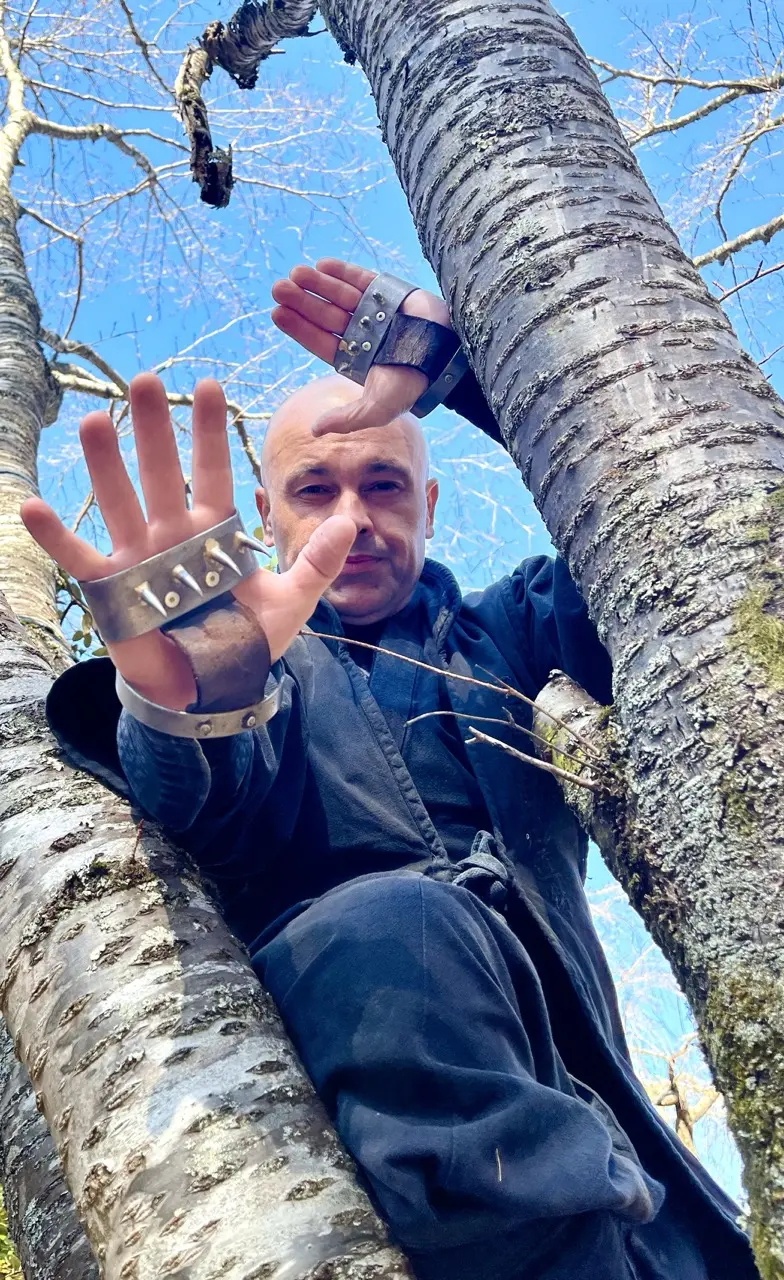

Jerome Pailliette
Jerome Pailliette
Ninjutsu Kyoto Togakure Ryu Ninpo Dojo | Instructor
Jerome began martial arts in childhood, studying Shotokan Karate for six years from the age of eight. In 1988 he turned to the study and practice of Ninjutsu, continuing to explore body movement, distance, self-protection, weapons and the spirit of Ninpo.
From 1999, he trained in Japan and studied the teachings of Hatsumi Masaaki. He moved to Kyoto in 2006 and has continued practising and teaching there since that year.
Background
A Life of Martial Practice

- Childhood
First Steps in Martial Arts
Six years of Shotokan Karate from the age of eight established a foundation in posture, respect, repetition and physical training.
- 1988
Beginning Ninjutsu
Began studying and practising Ninjutsu, with an ongoing focus on Taijutsu, weapons, distance and adaptation.
- 1999
Training in Japan
Studied with Hatsumi Masaaki in Japan, deepening an understanding of the body movement and Ninpo principles behind the techniques.
- 2006
Practising and Teaching in Kyoto
Moved to Kyoto and continued practising and teaching Togakure Ryu Ninpo in a natural setting.
Teaching Approach
Understand the principles through your body.
Natural Movement
Develop unforced movement by aligning posture, breathing, balance and distance, rather than relying only on strength or speed.
Practice That Works
Explore how principles apply to different attacks, body types and terrain, beyond fixed or ideal conditions.
Shu–Ha–Ri
Begin by respecting the foundations and tradition, deepen your understanding, then learn to respond naturally without being bound to a fixed form.
Transmission & Preservation
The aim is to practise the teachings sincerely and pass them to future generations, rather than to display technical prowess.

Teaching Togakure Ryu Ninpo in Kyoto
Nature is a teacher that leaves no room to disguise how you move.
On Sakura no Mori’s uneven ground, you must remain aware of your footing, distance, surrounding people and trees. Instruction starts safely with fundamentals adapted to each person’s body and experience. The aim is to develop awareness, adaptability and the ability to protect yourself and preserve life.
Instruction is available in Japanese, English and French. Activities in Kyoto have also been featured by Kyoto Shimbun, Sankei Shimbun and Kansai TV’s “Yo–i Don!”.